Every year, millions of Americans are told the same thing: you need surgery. For many, that recommendation comes after weeks of failed medication trials and mounting frustration — not after a thorough exploration of advanced, non-surgical options. The reality is that a significant number of spinal conditions, including herniated discs, disc bulges, and chronic nerve compression, respond remarkably well to a structured, medically guided decompression program when it is applied correctly.
At Barrios NeuroSport Institute (BNI) in Miami, non-surgical spinal decompression in Miami is not a standalone treatment performed on a table. It is one pillar of the BARRIOS System — a comprehensive, clinically driven approach that combines targeted decompression, advanced manual therapy, shockwave technology, and neuromuscular retraining to address the root mechanical causes of spinal pain. This article explains exactly how this works, what the science says, and what patients realistically experience along the way.
“True recovery occurs when pressure is controlled, tissue adapts, and structure supports movement.”
BY THE NUMBERS
~600,000
spinal surgeries are performed in the United States every year, making it one of the most common surgical procedures in the country.
According to research cited by the CDC and published in major spine journals, the vast majority of these surgeries are performed for degenerative conditions: herniated discs, spinal stenosis, and chronic lower back pain. These are the same conditions that, in many cases, respond well to structured non-surgical care when intervention begins early enough.
Sources: CDC National Hospital Discharge Survey · Weinstein et al., Spine Journal · American Academy of Orthopaedic Surgeons (AAOS) annual procedure statistics.
What Is Non-Surgical Spinal Decompression Therapy?
Non-surgical spinal decompression refers to a controlled, motorized traction therapy that gently stretches the spine to create negative intradiscal pressure — essentially a vacuum effect within the disc space. This has two important consequences: first, it draws bulging or herniated disc material back toward the center; second, it promotes the flow of oxygen, water, and nutrients into the disc and surrounding tissues, which are normally avascular structures with very limited healing capacity.
What distinguishes the BNI approach is precision. Sessions are individually calibrated based on the patient’s specific diagnosis, pain response, and structural anatomy. The angle of pull, the amount of force, the hold-and-release cycle, and the total session duration are all customized — not set to a generic preset. This level of personalization is what separates a concierge-level spine program from a generic physical therapy experience.
Who Is a Candidate for Spinal Decompression in Miami?
Spinal decompression is particularly effective for patients dealing with conditions driven by mechanical compression and disc dysfunction. Ideal candidates typically present with one or more of the following:
- Herniated or bulging discs in the lumbar (lower back) or cervical (neck) spine
- Degenerative disc disease causing chronic stiffness and pain
- Sciatica — radiating pain, numbness, or tingling down the leg
- Facet syndrome and posterior element overload
- Spinal stenosis (mild to moderate) without surgical red flags
- Failed conservative care (physical therapy or chiropractic) without structural improvement
Decompression is generally not indicated for patients with severe osteoporosis, spinal fractures, advanced instability, active infections, or implanted hardware at the target segment. A thorough
clinical evaluation at BNI determines candidacy before any treatment begins.
Advanced Spinal Decompression Within the BARRIOS System
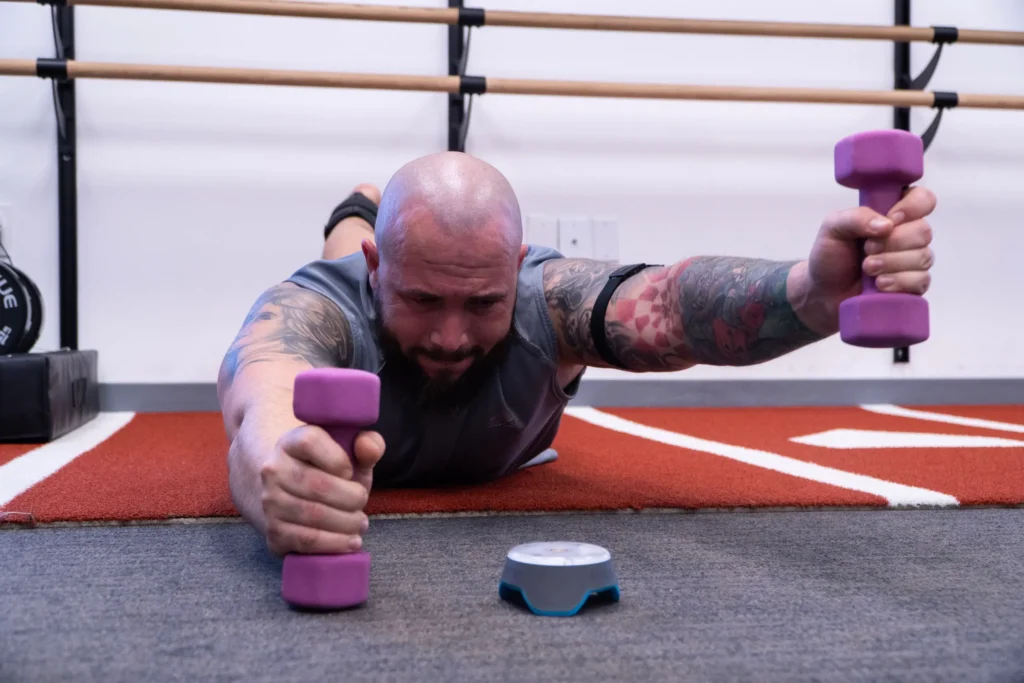
At BNI, spinal decompression is never applied in isolation. It functions as a key modality within the BARRIOS System — a medically integrated protocol built around four synergistic components that together address the mechanical, cellular, and neuromuscular dimensions of spinal dysfunction.
Spinal Decompression
Reduces compressive forces, improves fluid exchange within the disc, and creates the mechanical environment for tissue adaptation.
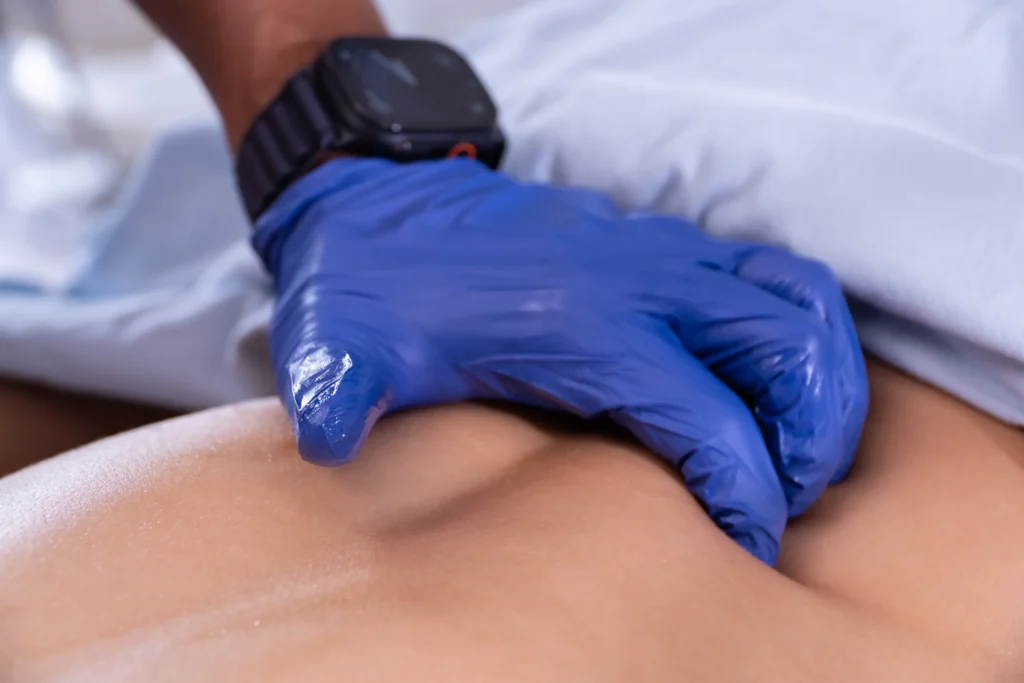
M.I.B. Therapy™ (Manual Interstitial Bioremodeling)
A precise hands-on technique that stimulates fibroblast activity, increases hyaluronic acid production, restores fascial hydration, and releases adhesions at the cellular level. Patients often describe early pain relief within the first sessions.
Shockwave Therapy
Acoustic waves penetrate deep tissue to stimulate angiogenesis, collagen remodeling, and cellular signaling. Particularly effective for chronic pain where tissue has become fibrotic or poorly perfused.
NeuroStrength Training™
Once pain is controlled and tissue begins to adapt, the program shifts to rebuilding neuromuscular control, trunk stability, and load distribution — the structural foundation that prevents recurrence.
The Science of Pressure, Pain, and Disc Recovery
Understanding why decompression works requires understanding the disc as a biological structure. Intervertebral discs are avascular — they have no direct blood supply. Nutrition reaches the disc nucleus through diffusion, a process driven by alternating compression and distraction. Chronic mechanical overload disrupts this cycle, leading to dehydration, reduced disc height, and progressive breakdown of the annular fibers.
Decompression reverses this process by creating controlled periods of negative intradiscal pressure. Studies using intradiscal pressure measurement have demonstrated that properly applied traction reduces nucleus pulposus pressure significantly — in some cases shifting it from positive to slightly negative values, which may facilitate retraction of herniated material.
Additionally, reduced mechanical compression decreases the inflammatory load on surrounding tissues. As prostaglandin concentration falls and microcirculation improves, pain receptor sensitization decreases — which is why many BNI patients report meaningful improvements in
pain and mobility within the early phases of their program.
Many patients report noticeable reductions in pain and improved mobility within the first phase of their NeuroSPINE program. Individual results vary based on diagnosis and program adherence.
What to Expect: A Realistic Timeline
A structured spinal decompression program at BNI is not a quick fix — it is a phased clinical process designed to produce durable results rather than temporary relief. Here is what a typical program progression looks like:
Phase 1 — Weeks 1–3: Pressure Reduction
The priority is identifying the specific mechanical factors driving symptoms and beginning to reduce intradiscal pressure and tissue irritation. M.I.B. Therapy is introduced in this phase to prepare soft tissue for decompression. Many patients begin to notice reduced pain intensity and improved morning mobility.
Phase 2 — Weeks 4–7: Tissue Adaptation
Decompression sessions continue with progressive calibration. Shockwave therapy is added to stimulate cellular repair. Patients typically experience sustained improvements in range of motion, less reliance on anti-inflammatories, and the ability to sit or stand for longer periods without exacerbation.
Phase 3 — Weeks 8–12: Structural Stabilization
NeuroStrength Training™ is introduced to rebuild the neuromuscular infrastructure that protects the spine under load. The focus shifts from symptom management to long-term structural resilience and return to full activity.
Some patients with acute presentations and mild pathology improve faster; others with multi-level involvement or longer-standing conditions require additional time. Progress is tracked objectively at each visit, and programs are adjusted accordingly.
When to Seek Help: Don’t Wait for Symptoms to Become Irreversible
One of the most common mistakes we see at BNI is patients who delayed care for months or years, hoping the pain would resolve on its own. While some acute disc episodes do self-resolve, chronic mechanical loading without intervention accelerates disc degeneration and increases the likelihood of surgical candidacy over time.
Seek a clinical evaluation promptly if you experience any of the following:
- Back or neck pain that has persisted for more than 4–6 weeks without improvement
- Radiating pain, numbness, or tingling into the arms or legs
- Pain that worsens with prolonged sitting, standing, or specific movements
- A prior diagnosis of disc herniation, bulge, stenosis, or degenerative disc disease
- Recurrent episodes of acute pain that are becoming more frequent
- Functional limitations affecting work, exercise, or sleep quality
Early intervention with a structured, non-surgical approach like the BARRIOS System gives the spine the best opportunity to recover without surgical risk, downtime, or dependence on long-term medication.
FAQs About Non-Surgical Spinal Decompression
Is non-surgical spinal decompression painful?
Most patients find sessions comfortable and even relaxing. The force applied is gradual and controlled, calibrated to each individual’s tolerance. Some patients experience mild soreness after the first one to two sessions as tissues begin to adapt, similar to what you might feel after a new workout.
How many sessions will I need?
Most programs at BNI range from 12 to 20 sessions over 6 to 12 weeks, depending on the diagnosis, severity, and individual response. A clinical assessment at your first visit will give you a specific program recommendation with a clear timeline and expected milestones.
Can spinal decompression help me avoid surgery?
For many patients, yes — particularly those with disc herniations, bulges, and sciatica where surgery has been recommended but red-flag criteria (bladder/bowel dysfunction, progressive neurological deficit) are absent. The NeuroSPINE Program at BNI has helped many patients avoid surgery by restoring function through a structured non-surgical approach. That said, some cases do ultimately require surgical intervention, and BNI will always provide an honest clinical assessment.
Is this the same as regular traction or stretching?
No. Consumer-grade inversion tables and generalized lumbar traction apply non-specific, fixed forces. Clinical decompression at BNI uses a computer-controlled system with variable angle, force curves, and cyclic distraction — and is delivered as part of a comprehensive clinical protocol, not as a standalone passive treatment.
Does insurance cover spinal decompression?
Coverage varies by plan. BNI provides full transparency on program costs during your initial evaluation. Financing options are also available so that cost does not become a barrier to receiving the level of care your spine needs.
Ready to explore a non-surgical path for your spine?
Schedule your clinical evaluation at Barrios Neurosport Institute in Miami. Our team will assess your specific condition, review your imaging, and build a personalized program designed for your lifestyle and goals.
Barrios Neurosport Institute™ · Miami, FL · FEEL GOOD. Move Better. Live Pain-Free.
This article is for informational purposes only and does not constitute medical advice. Individual results vary. Consult a qualified clinician for a diagnosis and treatment plan.